guide
How to Become a Professional Cosplayer
How to become a professional cosplayer: pick a paid route, build a portfolio, choose platforms, track costs and learn the rules before an agency.
Written by Sophia Brecht Published Last updated
To become a professional cosplayer, pick one paid route, build a portfolio that shows finished work, open the platforms that route needs, track what each build costs, learn the platform and copyright rules, and only then consider an agency. “Professional” means someone pays you for cosplay or for content made from it. There is no licence and no entry exam, so the plan is about getting paid, not getting titled.
How to become a professional cosplayer: what does professional mean?
It means cosplay is a paid activity for you: sales, subscriptions, appearances, sponsorship or commissions. Many paid cosplayers are really makers, models or entertainers, an argument an Escapist opinion piece made years ago and one we think still holds.
Decide which of those you are before you spend money, because a month of foam and fabric is hard to take back. The routes pay differently and need different skills.
| Route | What pays | What you need first |
|---|---|---|
| Subscription page | Fan subscriptions, tips, pay-per-view, customs | A consistent posting rhythm and platform rules knowledge |
| Patreon or Ko-fi | Tiers, commissions, shop | Finished sets, WIP updates, a clear tier list |
| Prints and merchandise | Print sales | Photos you own the rights to and a copyright check, see selling prints |
| Brand deals | Fees or free product | An audience a brand can see, see sponsorships |
| Appearances | Booking fees | A reputation, usually built on the other routes |
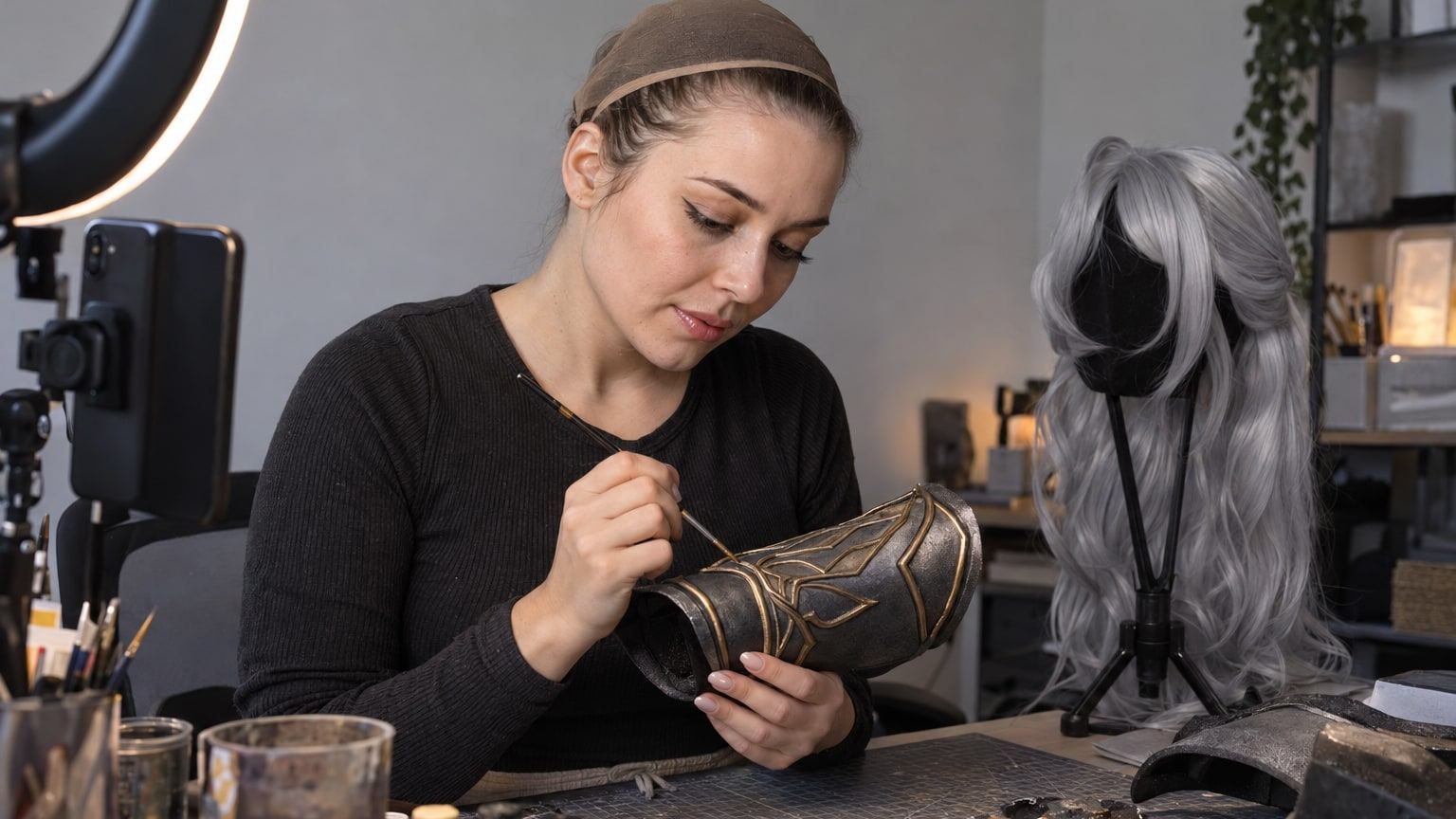
How do you build skills and a portfolio?
Finish costumes and photograph them well. A portfolio of six completed looks beats forty works in progress, because a buyer or brand wants to see that you finish.
Keep process photos too, since fans pay attention to builds. Credit your photographer on every image and agree in writing who may use the pictures and where. Choose a lane early: armour, wigs and styling, props, or character acting. You can widen later.
Which platforms should you open?
Open the ones your route needs and no more. A subscription page needs OnlyFans, Fansly or Fanvue; a SFW build page suits Patreon or Ko-fi. The platform comparison sets out fees and limits checked on 23 November 2026.
Use social media for discovery only. Plans for each network follow that network’s content rules, and our marketing page explains how we do it for managed creators.
How should you handle money?
Separate it from the start. Open a business account, keep receipts for materials and props, and record income by platform. Tax rules differ by country, so ask an accountant where you live; we do not give tax advice.
Costs matter more than most plans admit. The earnings guide explains why quoted incomes are unreliable and how to work out a net figure for yourself.
Which rules do you need to know?
Two sets: platform rules and copyright. Platforms ban content that suggests minors, including characters presented as minors, and they ban infringing someone else’s IP. The rules do not name cosplay, so the safe habit is to choose adult characters and original or archetype designs. The rules guide quotes the wording and the copyright guide covers what sources say. Neither is legal advice, so get advice for your own case.
What mistakes cost new creators the most?
Three come up again and again. Spending a month’s budget on one elaborate build before you know whether anyone wants it. Using official franchise art or logos in your promotion, which invites takedowns. And leaving photographer or co-performer arrangements unwritten, which matters because OnlyFans lets co-performers withdraw consent to appear in shared content (PF-07).
Start smaller than your ambition: one character, one set, a clear price, then adjust from what sells.
How do you know it is working?
Track four numbers every month: how many people see your free posts, how many of them subscribe or buy, how many buy again, and what a finished build costs you in money and hours. If reach grows but buyers do not, the problem is the offer or the price. If buyers repeat, the audience is real. Write the numbers down, because a plan you cannot measure turns into a hobby with receipts.
When does an agency make sense?
When you already have an audience and demand, and time is the limit. An agency handles chat, scheduling and promotion for a share of revenue, so there must be revenue to share. If you are still building your first sets, keep going solo.
We take 30%–60% of the revenue an account generates, in writing before signing, with no setup fee or retainer. Read are agencies worth it and the contract red flags before you talk to anyone, ours included. If you decide to apply, the application is read by a person who replies within 24 to 48 hours.
questions
Frequently asked questions
How do I become a professional cosplayer?
Choose one way to be paid, such as a subscription page, Patreon tiers, prints or brand deals, then make finished costumes and photograph them well. Open only the platforms that route needs, keep receipts so you know your real profit, and read each platform’s rules on age and copyright before posting. There is no licence to obtain. Consider an agency once your audience is larger than your time to serve it.